Quick answer
Massage releases the tight neck, shoulder and upper-back muscles that desk posture overloads, easing the ache and stiffness. Pairing it with movement and a better setup makes the relief last. Numbness or tingling down an arm should be checked by a doctor.
If your shoulders sit somewhere near your ears by mid-afternoon and your neck will not turn freely, desk work is almost certainly the cause, and targeted massage is one of the most direct ways to release it. The tight upper-back, neck and shoulder muscles that hold you over a keyboard are exactly what hands-on work reaches.
The honest part: massage undoes the tension, but the desk keeps rebuilding it. So this covers both how the work releases it and how to make the relief actually last.
Why desk work wrecks the neck and shoulders
Sitting at a screen, your head drifts forward, your shoulders round, and the muscles across the top of your back and the base of your neck have to hold that position for hours. They are not built for sustained holding, so they tighten, then ache, then become a knot you can feel with your fingers.
Stress makes it worse: when you concentrate or feel under pressure, you draw your shoulders up without noticing, and cortisol, the hormone that rises with stress, keeps the muscles primed for effort. Layer that on top of the posture and the tension becomes the permanent background hum most desk workers stop even noticing.
How massage releases it
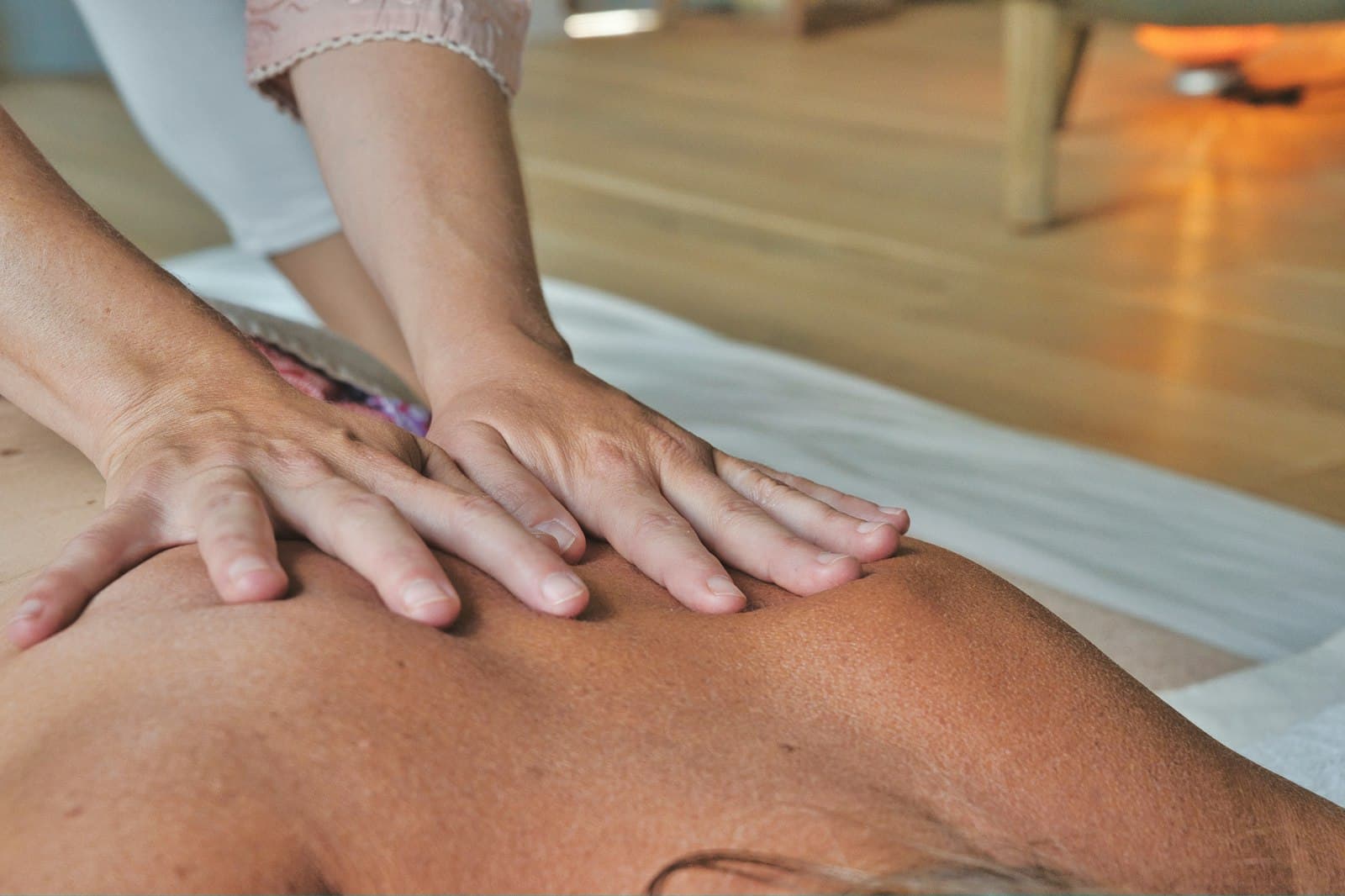
Hands-on work along the upper back, across the shoulders and into the base of the neck releases the tightened muscle fibres that posture has locked short. Where there are specific knots, slower, sustained pressure works into them until they let go, which lighter work never quite reaches.
Most women feel the difference straight away: the neck turns further, the shoulders sit lower, the headache that rode on the tension often lifts with it. How firm the work needs to be depends on how long the tension has been there, and it is always set with you, not done to you.
Massage undoes the tension. The desk rebuilds it. Lasting relief comes from working both ends.
Making the relief last
A single session brings real relief, but if you go straight back to the same setup the tension returns. The work lasts longest when you pair it with small changes: raising your screen to eye level, taking short movement breaks, and dropping your shoulders whenever you catch them creeping up.
For tension that has been there for years, deep tissue massage reaches the deeper, stubborn layers; for general tightness, a relaxing Swedish massage may be enough. Not sure which? Deep tissue vs Swedish massage explains the difference.
When to get it checked first
Most desk tension is muscular and safe to massage. But see your GP before booking if you have numbness, tingling, or pins and needles down an arm or into the hands, weakness in an arm, or neck pain that follows an injury or accident. These point to something beyond simple muscle tension that needs assessing first.