Quick answer
Reflexology can ease the tension and soreness around heel pain and plantar fasciitis by working the soft tissue of the foot, and reviews of the research do find it lowers stress. It is a supportive comfort measure rather than a treatment, as the best evidence does not show reflexology to be effective for any medical condition, so it works best alongside advice from a GP or podiatrist.
Reflexology can bring real comfort to sore, aching feet, including the heel pain and tightness that come with plantar fasciitis. By working the foot in detail it eases the surrounding tension and soothes the area, and reviews of the research have found reflexology reduces stress and improves how people say they feel. What it cannot do is cure the underlying problem. Reviewers looking at reflexology as a medical treatment have been clear that the best evidence does not convincingly show it to be effective for any medical condition. I would rather you knew that before you booked.
It works best as one comforting piece alongside the advice of your GP or a podiatrist, never instead of it.
What heel pain and plantar fasciitis feel like
Plantar fasciitis is irritation of the band of tissue running along the sole of your foot. The NHS describes it as a sharp pain between the arch and the heel that feels worse when you start walking and better when you rest, which is why the first few steps in the morning are so often the worst. Exercising too much, standing on hard surfaces for long stretches and carrying extra weight all feed into heel pain, and tight calves and unsupportive shoes are commonly blamed too.
It is common, genuinely wearing, and the surrounding muscles tend to tense up and guard, which adds its own ache on top.
How reflexology helps
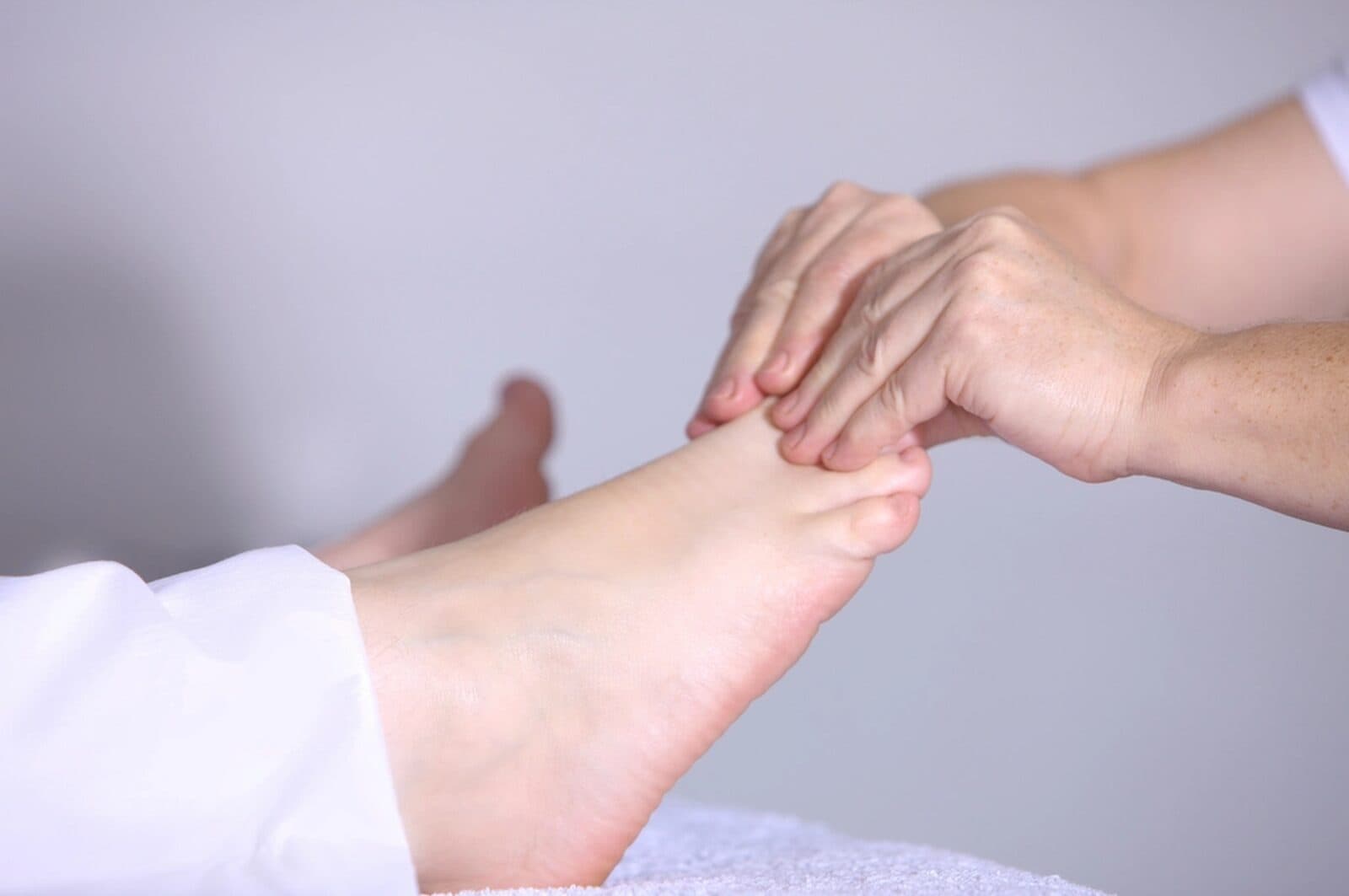
Reflexology works the foot in detail, easing the soft-tissue tension around the heel and arch. As the foot and lower leg relax, the dragging soreness often settles and the foot feels lighter and less gripped. That is what women describe to me. No trial has measured it, so take it as experience rather than proof.
The clearer benefit in the research is the calm. A systematic review of the physiological and biochemical effects of reflexology found a reduction in stress measures, and every included study that looked at psychological wellbeing found it improved. The same reviewers were candid that it is still unclear exactly how reflexology produces those changes. Many women simply find it the most cared-for their feet have felt in a long time.
Reflexology will not cure plantar fasciitis. It can make living with sore feet a great deal more comfortable.
What reflexology cannot do
Reflexology does not repair the plantar fascia or change the things often driving the problem: footwear, foot mechanics, tight calves, or how much you are on your feet. It is comfort and relaxation, not a medical treatment. A review of 23 randomised trials across a wide range of conditions concluded that the best clinical evidence does not convincingly show reflexology to be an effective treatment for any medical condition, which is why I call it comfort rather than treatment.
For plantar fasciitis that is severe or not improving, a GP or podiatrist can assess it properly and advise on stretches, supportive insoles, footwear and other treatment. Reflexology sits comfortably alongside that.
See a GP or podiatrist if
Get it checked rather than relying on reflexology if you have severe heel pain, pain that is not improving after two weeks, numbness or tingling in the foot, or pain following an injury. Those all need proper assessment.
What a session looks like
In the warm, quiet log cabin, women only, a reflexology session is calm and unhurried, working the feet while you relax fully. We can give the heel, arch and calf reflexes extra attention if that is where you are sore.
You can read about reflexology and book it here. If standing or desk work also leaves your back and shoulders tight, we can talk about what suits you best.
Sources
- NHS: Heel painHow plantar fasciitis presents, common causes of heel pain, and when to see a GP, including pain that has not improved after two weeks or any tingling or loss of sensation in the foot.
- Reflexology: an update of a systematic review of randomised clinical trials, 2011 (CRD summary)Across 23 randomised trials, the best clinical evidence does not convincingly show reflexology to be an effective treatment for any medical condition.
- The physiological and biochemical outcomes associated with a reflexology treatment: a systematic review. Evidence-Based Complementary and Alternative Medicine, 2014Reflexology was associated with a reduction in stress measures and improved wellbeing, though the reviewers note it is still unclear how those changes come about.